Golden Knights’ Penalty Kill Slips to 67.9% as Goals Against Mount
Vegas has allowed a power-play goal in four straight games. The fix starts with protecting the crease and choosing better moments to pressure.

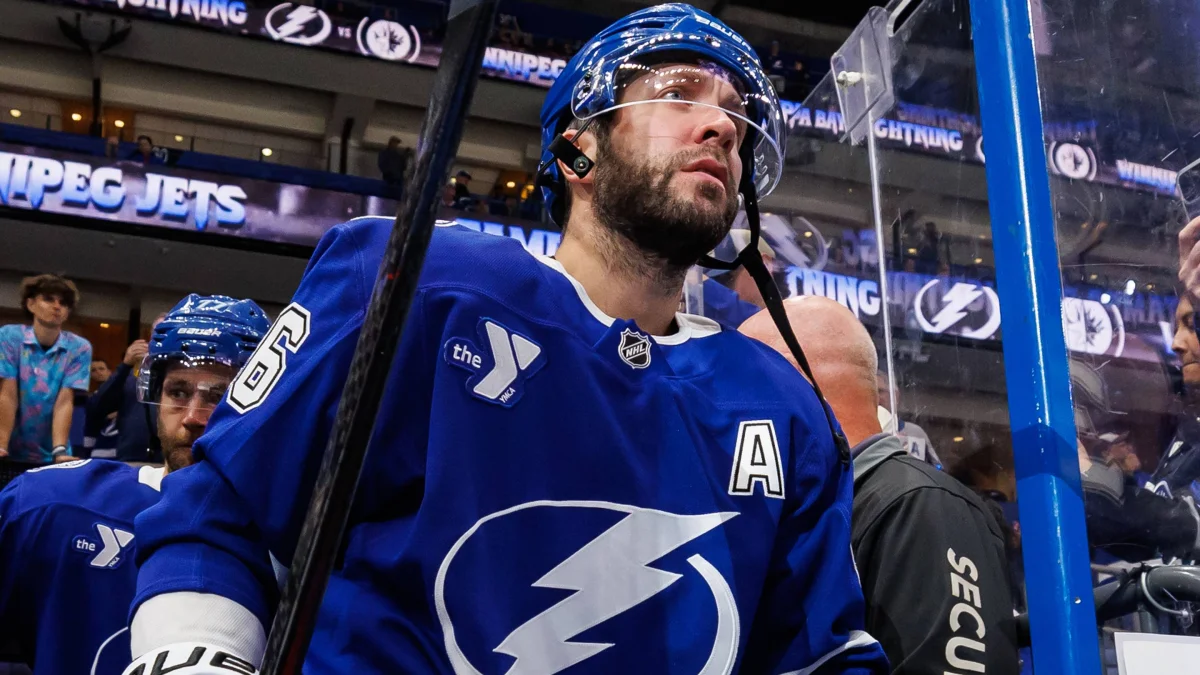
(Photo Credit: @TBLightning on X/Twitter)
Vegas has a clear penalty-kill problem to solve: opponents are getting too much room near the net, and the Golden Knights’ recent results show how quickly that can turn into goals. They have allowed a power-play goal in each of their last four games, their longest such run since giving one up in five straight early last season. Across those four games, the Knights have conceded five power-play goals, their most in a four-game span since December 2023, when they allowed nine.
The season rate has fallen to 67.9%, fifth worst in the league. Vegas has killed only three of the last eight opposing power plays. Those figures point to more than one rough night: the unit needs to limit dangerous chances before it can expect its results to improve.
Crease coverage is the immediate concern
Brayden McNabb put the issue plainly after the latest game, when Vegas gave up two power-play goals. “I think our kill’s got to be way better. I mean, if we kill that, maybe we get some momentum in the game and instead they score. And they got another one in the 3rd. So, you know, that needs to sharpen up, and we’ll look at it. We’ll get better.”
McNabb was on the ice for both power-play goals against in that game. He has also been out there for seven of the nine power-play goals Vegas has allowed this season. That involvement makes him central to the current discussion, though the available numbers alone don’t explain why each goal went in or assign responsibility for a particular breakdown.
The goals-against totals among the listed penalty killers show how often several key players have been present when opponents scored:
- McNabb: 7
- Theodore: 6
- Dowd: 6
- Karlsson: 5
- Howden: 4
- Hanifin: 2
- Lauzon: 1
- Andersson: 1
- Marner: 1
- Bowman: 1
- Wotherspoon: 1
- Connelly: 1
Those totals need to be read alongside the workload. McNabb and Lauzon have led the defensemen in penalty-kill ice time, while Dowd and Karlsson have received the most time among the forwards. A player who takes more shifts in those situations has more chances to appear on a goal against, so the list is a starting point for reviewing the unit rather than a standalone measure of individual performance.
Hanifin offers a positive comparison
Noah Hanifin has been the clearest bright spot in the numbers provided. He has played 16:53 on the penalty kill, three minutes less than McNabb, and has been on the ice for two goals against. He has also been on for two shorthanded goals. The source’s advanced-stat comparison also puts Hanifin ahead of McNabb and Lauzon, although it does not provide the figures behind that assessment.
That gives Vegas a useful example within its own group as it reviews the unit. The broader question is how to keep pressure on opposing power plays without opening the space around the crease. The reported breakdowns suggest the Knights have sometimes moved away from the front of the net, leaving room for a screen or a tip. That pattern appeared on four of the last five power-play goals against and on several earlier ones this season.
Pressure has a place on the penalty kill, but its timing matters. If a defender leaves the crease to challenge a puck carrier before the play is contained, opponents may gain the time and space to send a shot through traffic or direct it toward goal. Vegas appears to have leaned toward ending possessions early; the recent sequence suggests that approach needs more restraint and better support around the net.
Shorthanded scoring has come with a tradeoff
The Knights have produced three shorthanded goals, tying them with only two other teams at that total. That attacking return is a genuine strength, but it doesn’t erase the need to stop opposing power plays. In just under 40 minutes of penalty-kill time, Vegas has generated 0.79 expected goals and scored three times. The gap shows that the shorthanded scoring has outpaced the chances created in the cited sample; it doesn’t offer a reason to expect that rate to continue.
The next step is therefore less about abandoning pressure than picking the right opportunities to use it. Vegas can keep looking for shorthanded chances while making crease protection the first responsibility. If the defensemen hold their position when the puck is dangerous and the forwards help limit options around the net, the unit can give its goaltender a better chance to see shots and reduce opportunities for tips.
The roster has players with substantial penalty-kill experience, and Hanifin’s early results show one positive piece of the group. But the recent goals against make the priority straightforward: sharpen the structure in front of the net, then let pressure create openings when the play allows it.

The post Golden Knights Penalty Kill Hits The Skids appeared first on SinBin.vegas.