Podkolzin’s Ejection After Oilers-Ducks Fight Raises Questions About NHL Officiating
Vasily Podkolzin was ejected after a fight with Drew Helleson was called a “one-man fight,” renewing questions about consistency in NHL officiating.
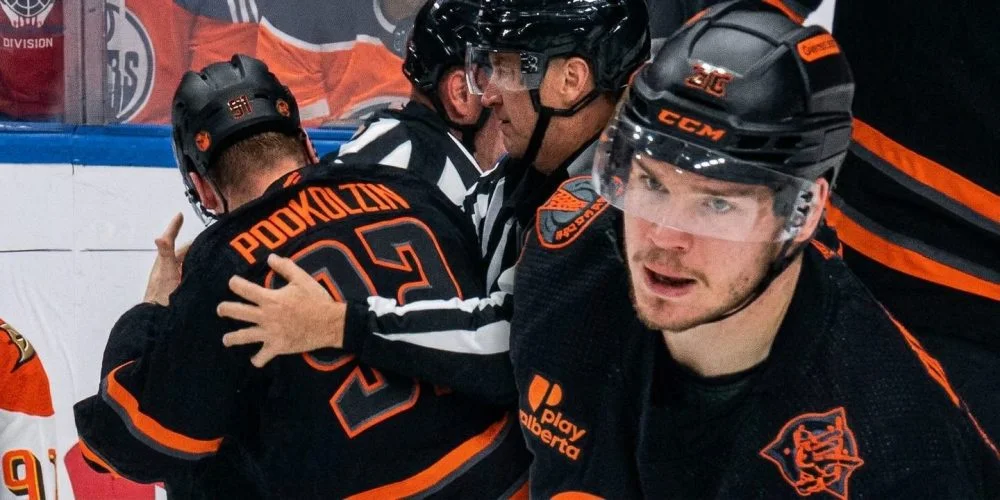
Vasily Podkolzin’s ejection became the talking point after Edmonton’s Thursday game against Anaheim, with the penalty explanation leaving a basic question unanswered: how was the altercation a “one-man fight” when both players appeared to engage? The call cost the Oilers a forward for the rest of the game and gave the Ducks a five-minute power play. It also revived a broader frustration among players and fans: the standard for penalties can seem to change from one game to the next.
A fight with an unclear explanation
The sequence began when Connor McDavid was driven into the net from behind. Anaheim defenseman Drew Helleson exchanged words with the Oilers captain, and Podkolzin stepped in. He dropped his gloves with Helleson, and both players appeared to participate in the fight.
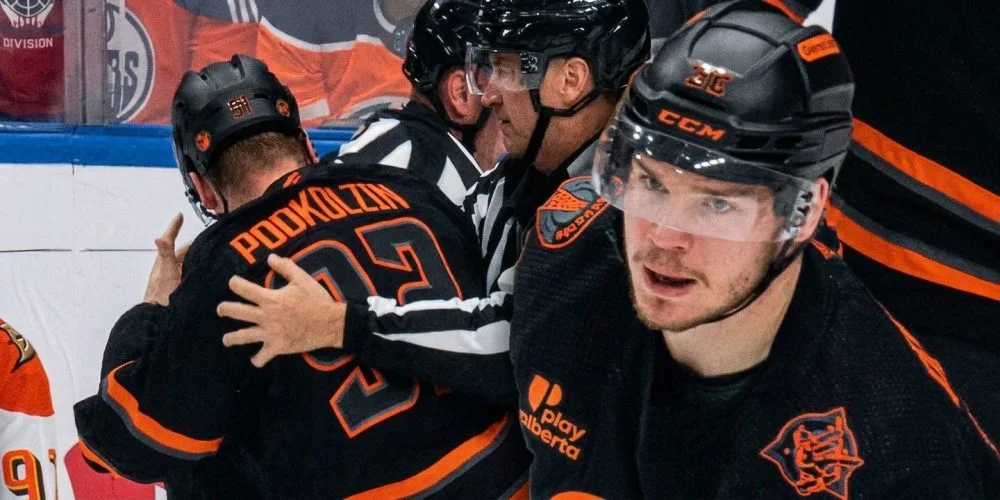
Video of the altercation shows why the announced call drew scrutiny. Helleson dropped his gloves and appeared to throw punches. Podkolzin, meanwhile, got the better of the exchange. The officials assessed Podkolzin an instigator penalty, a fighting major and a game misconduct, describing the incident as a “one-man fight.”
That wording suggests an opponent who didn’t take part in the fight. But Helleson appeared to engage. The explanation left spectators trying to reconcile what they saw with the penalty announcement, especially since the altercation continued without the linesmen stepping in to stop it.
If the officials judged Helleson unwilling or unable to defend himself, that raises a further question about why the fight was allowed to proceed. If they judged both players to be participants, then “one-man fight” doesn’t seem to describe the sequence. The result was clear: Podkolzin was out for the remainder of the game, and Anaheim received a five-minute power play. The reasoning behind that result was less clear.
What the rule language suggests
The NHL’s Rule 46 includes an Aggressor Rule for a player who keeps attacking an opponent who is defenseless, knocked down, or unwilling or unable to defend himself. The source article describes that rule as carrying a major penalty and game misconduct. Whether it applied to this exchange is open to debate, but that description would at least point to a specific concern about how the fight unfolded.
The instigator penalty has a different focus: it penalizes a player for forcing an unwilling opponent into a fight. The assessment against Podkolzin included that penalty, along with the fighting major and game misconduct. Yet Helleson appeared to drop his gloves and throw punches, which makes the explanation harder to square with the sequence as described.
There’s a meaningful difference between saying a player started a fight and saying the opponent didn’t participate. The first concerns how an altercation began; the second describes what happened once it was underway. When the call uses the latter description, fans need to be able to see how the play fits it.
A decisive win in a fight doesn’t, by itself, establish that the other player was unwilling to take part. The relevant details are the players’ actions and the officials’ interpretation of them. Here, the penalty announcement supplied a label but didn’t resolve the apparent mismatch between that label and Helleson’s participation.
The consistency question reaches beyond one game
One disputed call doesn’t establish a league-wide pattern on its own. But the episode landed amid a familiar concern: the standard for contact and penalties can feel different from game to game, then shift again in the playoffs. Crews have a fast, physical game to manage, and missed calls are part of officiating. The harder problem for teams is not knowing what threshold they’ll face from one night to the next.
That uncertainty affects how players make decisions. A player may be assessed for contact that went uncalled the night before, while a team’s approach to physical play can depend on which infractions a crew appears willing to penalize. Coaches and players have to adjust in real time, but unexplained calls make that adjustment harder.
Edmonton radio host Dan Tencer voiced that frustration in a post shared on X, arguing that the quality and pace of officiating were making the game difficult to watch. His criticism is pointed, but the issue raised by this call is more specific: fans need a clear connection between what happened on the ice and the penalty assessed.
Consistency doesn’t require referees to get every decision right. It does require a recognizable standard across the regular season and playoffs, and explanations that make sense alongside the available view of a play. When an unusual call changes a game, a clear account of how the rule applies can help players and fans understand the decision, even if they disagree with it.
Why the call drew attention
Edmonton and Anaheim had plenty of recognizable talent on the ice, including McDavid, Leon Draisaitl, Cutter Gauthier and Leo Carlsson. But discussion after the game centered on the penalty that removed Podkolzin and put the Oilers in a difficult spot. That shift in attention is part of the cost of an explanation that fans can’t readily match to the action.
Penalties can affect momentum, player availability within a game and the opportunities each team gets on the power play. That gives every unusual call weight beyond the announcement itself. It also makes consistent enforcement valuable to teams: they can respond to a standard they understand, while unclear or uneven calls leave more room for confusion.
The next useful signal will be whether the league’s explanation clarifies why the officials treated this as a “one-man fight,” given Helleson’s apparent participation. Until then, the footage and the penalty description remain difficult to reconcile. For the Oilers, the immediate consequence was Podkolzin’s early exit; for the league, the incident is another reminder that a call needs to be both supportable and understandable.
Next: New Victor Hedman Rumor May Have Revealed the Real Reason Nikita Kucherov Wants Out