Avalanche’s Dylan Larkin Trade Fit Looks Unlikely, Pierre LeBrun Says
Colorado hasn’t engaged on Larkin, Pierre LeBrun reports. A crowded center depth chart and the cost make a deal difficult to picture.
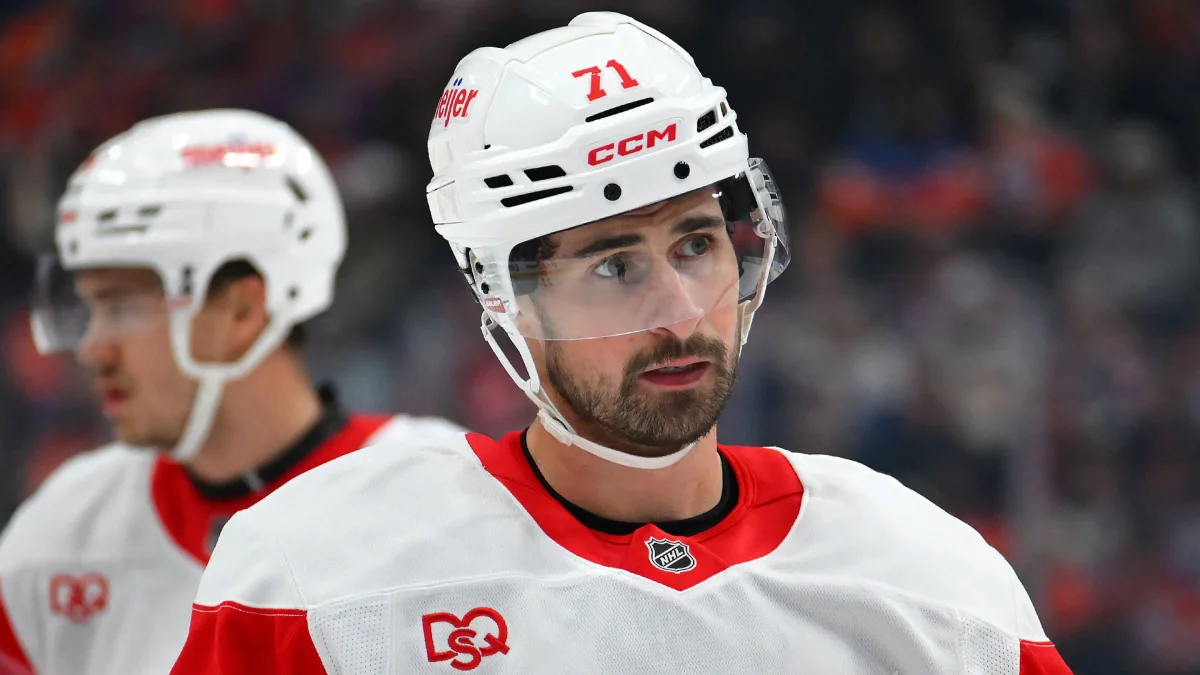
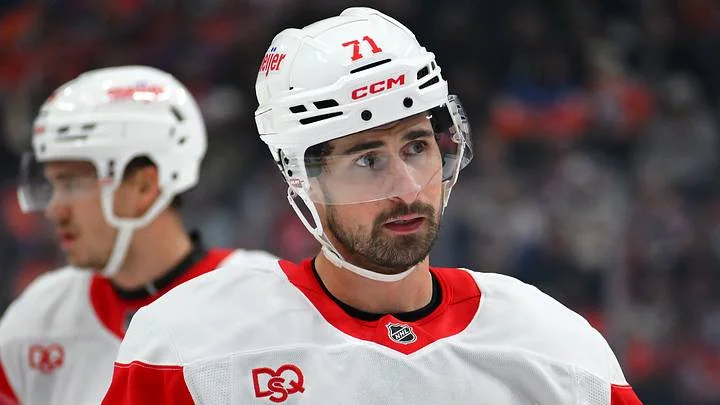
Colorado’s center depth and the reported price for Dylan Larkin point in the same direction: a trade with Detroit looks like a long shot. Pierre LeBrun of The Athletic reported that the Avalanche haven’t engaged with the Red Wings about the 31-year-old forward, whose $8.7 million cap hit would add another obstacle.

LeBrun’s explanation was direct: “I’m told the Avs have not engaged to this point. They’ve got a million centers, as is.” That assessment fits Colorado’s current roster situation. The Avalanche already have more experienced options down the middle than open center roles, and some players have moved to the wing to stay in the lineup.
LeBrun’s report in The Athletic comes amid recent discussion around Larkin. But the presence of his name in trade talk doesn’t by itself make Colorado a likely destination. The Avalanche have not been reported as an active suitor, and their roster offers a clear reason to hold back.
Colorado already has center options
Nathan MacKinnon leads the group, with Brock Nelson viewed as a second-line fixture. Nazem Kadri and Nic Roy have also had to play on the wing to find places in the lineup, while Fedor Svechkov and Parker Kelly give Colorado additional options at center. Taken together, that’s a crowded mix before the Avalanche consider adding another veteran down the middle.
That depth matters when judging a potential trade. A center acquired at significant cost needs a clear role, and Colorado would have to decide which existing players lose minutes or shift positions. Larkin’s ability to play a major role is evident in the discussion around him, but the Avalanche would still need a fit that serves the whole lineup. Simply adding a prominent name doesn’t answer that question.
The cap hit adds another layer. At $8.7 million, Larkin would take up substantial room in Colorado’s salary structure. Any deal would have to account for that commitment alongside the acquisition price and the roster adjustments required to make room. With established centers already competing for spots, the Avalanche would be paying a high price to address an area that doesn’t appear to be an immediate need.
That’s why the idea of Colorado pursuing Larkin this season is difficult to square with the information available. LeBrun says the teams haven’t engaged, and the reported financial and roster considerations give the Avalanche little apparent reason to start talks. Unless the underlying conditions change, speculation about a possible destination remains just that.
An offseason opening would depend on several choices
The longer-range case is more conceivable, though it still rests on multiple decisions. Roy is set to become an unrestricted free agent next summer. If Colorado doesn’t re-sign him, his departure could open a spot in the middle. Nelson’s contract ends after the following season, creating another potential vacancy if the Avalanche choose not to retain him.
Those timelines could give Larkin a more defined path into the lineup: a third-line role at first, with a chance to move higher if Nelson later leaves. That’s a possible roster fit, not evidence that Colorado is planning such a move. The Avalanche would have to weigh their own free-agent decisions, Larkin’s cost and the team’s other needs before treating that opening as a reason to pursue him.
Detroit’s asking price would also have to come down significantly, according to the source article’s assessment. A lower price would reduce the cost of filling a role that Colorado doesn’t urgently need today, but it wouldn’t resolve every issue. The cap hit would remain a factor, and a prospective deal would still require space for Larkin in a lineup already crowded at center.
Another condition raised in the discussion is whether Larkin would push for a move to Colorado. The article compares that hypothetical pressure to Artemi Panarin’s move from the New York Rangers to the Los Angeles Kings. That comparison illustrates one possible route for a difficult deal, but it doesn’t establish that Larkin wants to leave Detroit or that the Avalanche are preparing an offer.
For now, the strongest signal is the lack of engagement reported by LeBrun. Colorado has enough centers to fill its current roles, and the combination of an $8.7 million cap hit and a prohibitive price would make a Larkin trade a costly solution to a problem the Avalanche don’t appear to have. An offseason opening could change the roster math, but it would take several choices by both clubs—and a much more favorable price—for the idea to become realistic.