Panthers’ Record Without Aleksander Barkov Shows Both Resilience and a Clear Cost
Florida has gone 102-105-17 without Barkov, but the scoring, special teams and faceoff numbers reveal what his absence takes away.
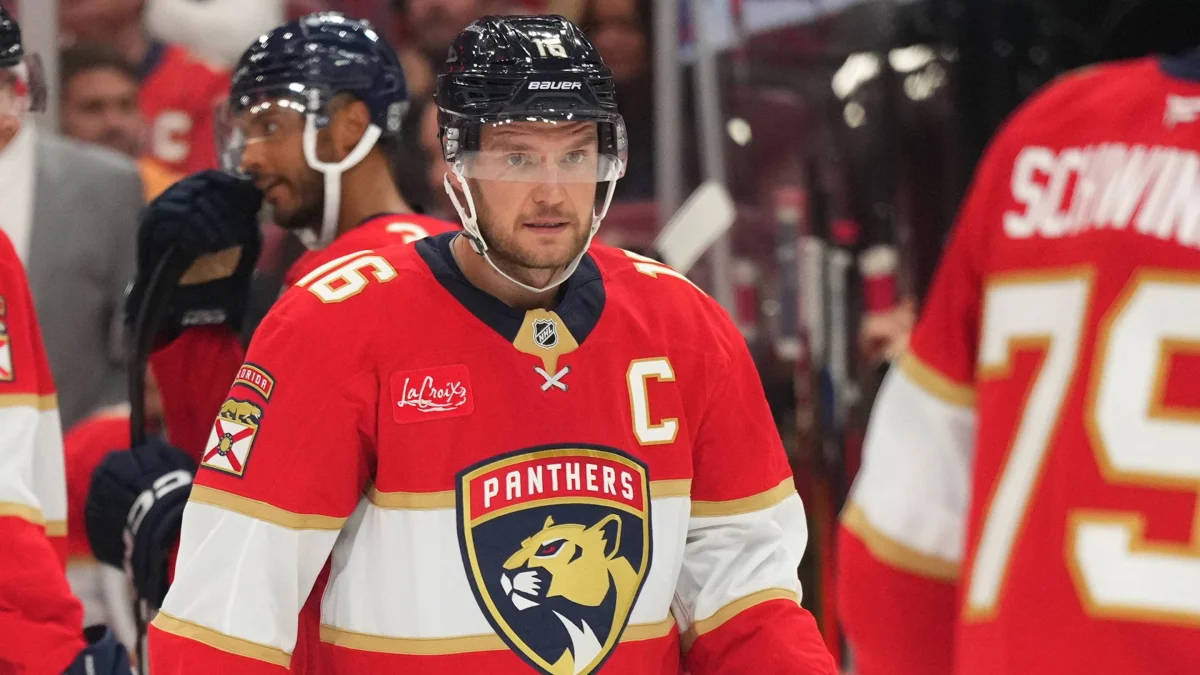
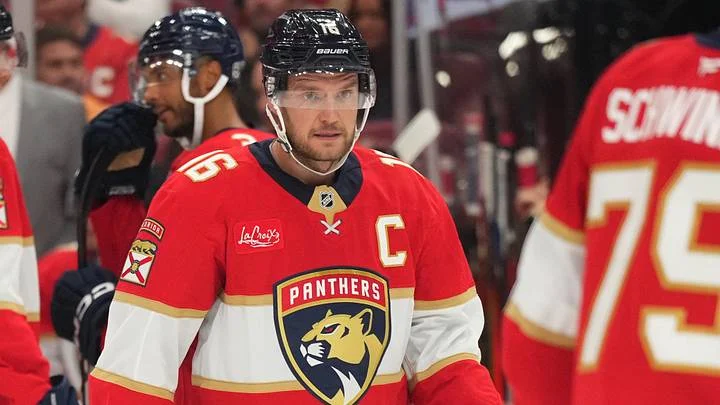
Florida’s results without Aleksander Barkov tell two stories at once. The Panthers have managed a 102-105-17 record across 224 games without their captain, a .455 win percentage. That’s a difficult stretch, but it also shows a team that has found ways to remain competitive through repeated absences from one of its most important players.

The broader numbers reveal the harder part: Florida has scored 641 goals and allowed 740 in those games, a minus-99 goal differential. The club has often stayed in games, but Barkov’s absence has coincided with a measurable drop in the details that shape them. With his status uncertain after a lower-body injury against the San Jose Sharks on Oct. 1, the historical record offers context, not a guarantee about what comes next.
A long history of games missed
Barkov, the franchise’s all-time leading scorer and a three-time Selke Trophy winner, has appeared in 806 of a possible 1,030 Panthers games since his 2013-14 rookie season, or 78.25%. He has missed 224, including his entire 2025-26 campaign after tearing the ACL and MCL in his right knee. That was the first full season he had missed in his NHL career.
His early seasons brought several stretches on the sidelines: 28 games missed as a rookie, followed by 11, 16 and 21 in the next three seasons. From 2017 through 2020, he missed only nine games, including the 2018-19 season, when he played all 82. His absences grew again later, with 29 games missed across 2022 and 2023.
During Florida’s back-to-back Stanley Cup championship seasons, Barkov missed 26 games. The Panthers went 11-11-2 in those contests. That split captures the tension in the larger record: the club can win without him, but the missing games still create a meaningful burden over time.
The record hides the underlying strain
The Panthers went 40-38-4 during the 2025-26 season without Barkov and finished near the bottom of the Atlantic Division, well short of a playoff spot. Across all 224 games he has missed, Florida’s opponents have outscored the team 740-641. The Panthers did outshoot those opponents, 6,816-6,658, a difference of 158 shots.
That gap between shot volume and goals is worth watching. More shots suggest Florida has continued to generate attempts, but the overall goal differential shows that possession or volume alone hasn’t consistently translated into results. The figures provided don’t explain why, and they shouldn’t be read as proof that Barkov’s absence alone caused the difference. They do show how much more often the Panthers have been outscored than outshot in these games.
Special teams have also leaned against Florida. The Panthers scored 124 special-teams goals and allowed 154, a 30-goal deficit. They were slightly ahead in shorthanded goals, 23-21, but that narrow edge hasn’t offset the broader shortfall. Those totals point to another area where the club has had trouble replacing what Barkov brings across the lineup.
The faceoff numbers offer a particularly direct measure of what Florida loses down the middle. In games without its top-line center, the Panthers won 47.55% of draws, losing 6,906 faceoffs while winning 6,261. A faceoff doesn’t decide a game by itself, but a sustained deficit can make it harder to start with the puck, especially in situations where one clean possession matters.
Florida can cope, but the cost is visible
Before Barkov missed the full 2025-26 season, Florida’s record without him was 62-66-13, with a minus-73 goal differential. The team’s 40-38-4 mark last season added a substantial block of games to the overall sample. The Panthers’ ability to avoid a complete collapse is real, but so is the evidence that surviving his absence has often meant giving ground in the standings and across key game measures.
Florida has placed Barkov on long-term injured reserve, which, according to the source, makes him ineligible to return until the end of November. The full extent of his lower-body injury has not been announced. Speculation about a Christmas return or a season-long absence remains speculation; the team’s next update will matter more than guesses about a timetable.
The source also describes Florida as a stronger, healthier roster than the one that entered last season without Barkov, citing Bill Zito’s roster building and a separate report about a trade involving Brady Tkachuk. That could help the Panthers absorb the loss, though the numbers from prior seasons suggest no roster adjustment erases the specific effects of Barkov’s absence. Florida has won plenty of games without its captain, but the minus-99 goal differential, special-teams deficit and faceoff results show the price. The immediate test is whether this group can keep its results steady while those underlying gaps close.