Blue Jackets Need Conor Garland’s Speed and Scoring Back in the Mix
Garland has managed seven points in 23 games with Columbus. The Blue Jackets need his playmaking and pace to lift their forward group.

Columbus needs more than reliable two-way shifts from Conor Garland. The winger was brought in to add pace and secondary scoring, but his early Blue Jackets numbers point to a player who hasn’t yet found a steady place in the attack. With the team short on offense and Garland occupying a fourth-line role, getting his game moving again could matter well beyond his individual point total.

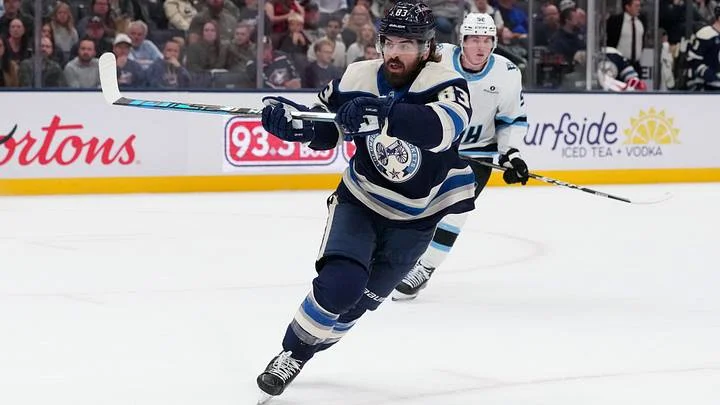
General manager Don Waddell has assembled a roster with veteran experience, size and two-way ability. Those qualities can make Columbus harder to play against, but they don’t solve the need to score. Garland’s arrival from Vancouver just before last spring’s NHL trade deadline was meant to help: he could strengthen the middle six and give the Jackets another source of offense behind their leading contributors.
His first few games offered a compelling preview. After being held off the scoresheet in his Columbus debut, Garland scored four goals across his next two games. The burst showcased the speed and persistence that made him an appealing addition. It also set a high bar for what came next. In the final 18 games of the stretch, he produced one goal and three points.
That drop-off makes the current lineup fit harder to ignore. Garland has opened this season mostly on the fourth line under coach Rick Bowness, despite a roster that needs more attacking threat. A depth role can still have value, but it limits the chances for a skilled winger to work with linemates who can turn his pressure into scoring plays. For Columbus, the question is whether the role reflects his current level or is keeping him from finding his rhythm.
The play-driving signal matters
Garland’s scoring history is only part of the case for giving him room to contribute. Per MoneyPuck, his on-ice Corsi percentage was at least 54% in every season of his career before falling below that mark last year. Corsi tracks shot attempts for and against while a player is on the ice; a figure above 50% means his team generated more attempts than its opponents during those minutes.
That measure reached 59% in 2023-24, when Garland recorded 20 goals and 47 points. Those are useful results for a second-line winger, and they fit the kind of contribution Columbus hoped he could provide. He has not been an elite scorer, but a strong possession game can help a team sustain pressure and create chances even when the points aren’t arriving. The concern, then, isn’t simply that Garland has scored too little. It’s that the underlying play has also dipped.
Through the Blue Jackets’ first two games this season, he recorded three shot attempts, none on goal, and a 47% Corsi while spending most of his time on the fourth line. Two games are a small sample, especially when a player is adjusting to a limited role. Still, the early figures reinforce what his quiet start has suggested: Columbus hasn’t yet seen the pace and puck pressure that could make him a useful driver of offense.
Columbus needs a clearer return
In 23 games with the Blue Jackets, Garland has five goals and seven points, a minus-six rating and an average of about 13 minutes per game. The four-goal burst in his first three appearances accounts for much of his scoring production. Remove that brief run and the broader stretch offers little evidence of the consistent secondary offense Columbus needs.
Garland is 30 and under contract for six seasons, including this one, at a $6 million average annual value. He is the fifth-highest-paid forward on the team, so a fourth-line assignment and modest production create a mismatch between his place in the lineup and the role his contract suggests. That doesn’t mean he should be promoted on salary alone. It does mean the team has reason to find out whether a different deployment can restore his impact.
The next step is straightforward in principle: Garland needs to bring more speed and pressure to his shifts, while Columbus needs to give him a chance to build chemistry in a role where those traits can create offense. A return to 40 or 50 points would require steady production, not another short scoring burst. His history gives the team a reason to expect more, while the recent possession numbers make the rebound far from certain.
For a Blue Jackets team chasing a playoff place, Garland’s development is a practical test of whether the forward group can turn its size and defensive responsibility into enough scoring. Watch for the details before the goals: more attempts, more involvement in the attack and minutes that let his speed matter. If those signs appear, the points have a better chance to follow.