Blue Jackets’ Culture Reset Faces Early Test After 1-4 Start
Rick Bowness promised higher standards in Columbus. Five games in, uneven play and repeated public criticism raise questions about how accountability will take shape.
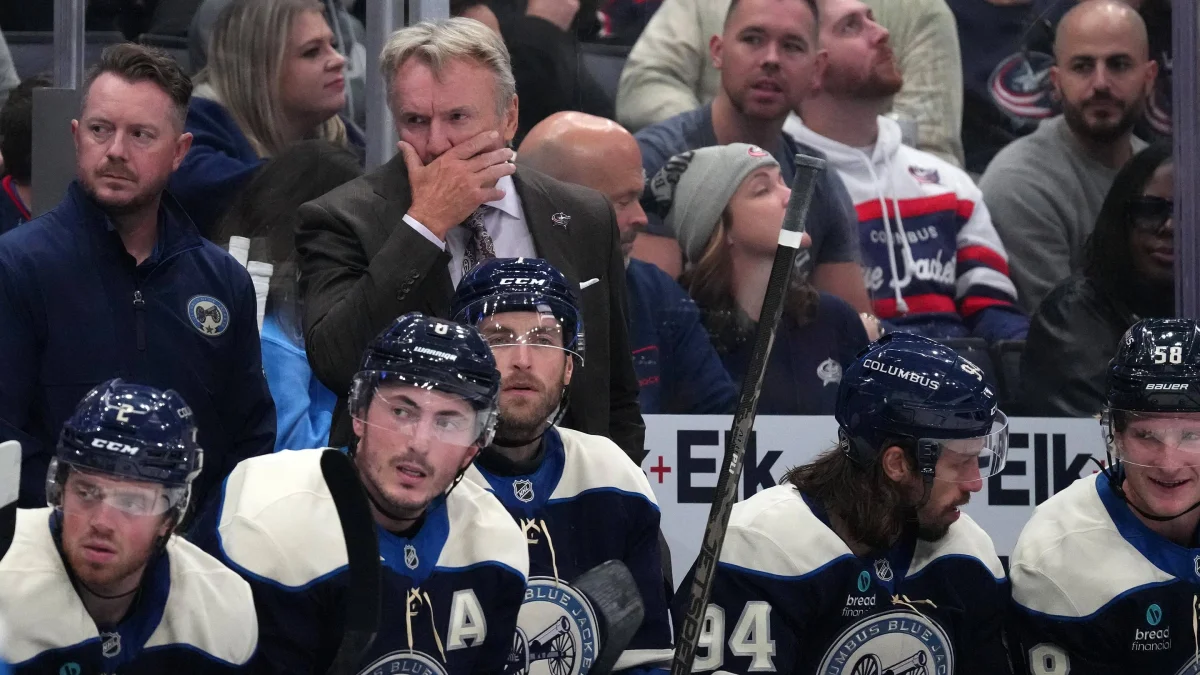
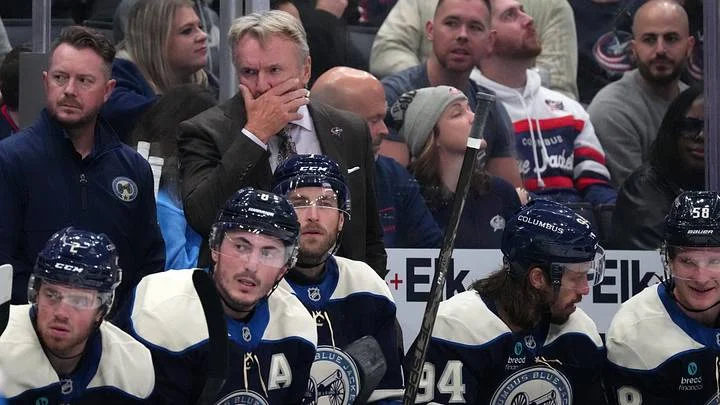
Rick Bowness came back to Columbus with a promise to change the Blue Jackets’ culture. Five games into his first full season behind the bench, the team’s early performances have made that promise feel less like a plan and more like a question: what will accountability look like when the same problems keep appearing?

The results have been uneven, and the pattern is familiar. The Blue Jackets looked shaky in their opener against Buffalo, then struggled to keep pace with Utah and St. Louis. Their fifth game, a loss to Florida, brought another troubling combination: stretches of decent even-strength play undermined by penalties and poor special teams. The one clear bright spot, in the view of this observer, came against Pittsburgh, when Columbus showed what it can look like against a talented opponent.
That range matters. Five games are a small sample, and a short preseason and training camp can make a messy opening stretch easier to understand. But the issue isn’t simply that Columbus has lost games or looked imperfect. It’s that the performances have repeatedly raised concerns about preparation, discipline and defensive structure, while Bowness’s public message has leaned heavily on criticism of the players.
Results have exposed the gap between promise and performance
Against Buffalo on opening night, the Blue Jackets appeared unsettled, but they found enough offense to beat a similarly shaky Sabres team and collect two points. That was a result to build on, even if the underlying play left work to do. The next game offered a sharper warning: Columbus looked flat against Utah, which dictated the pace and exposed problems in the Blue Jackets’ defensive-zone approach.
The team’s fourth outing, in St. Louis, brought another version of those concerns. Then came Tuesday’s game against Florida. The score was the worst of the five, even though Columbus had some positive moments at even strength. Penalties kept disrupting the game, and the special teams struggled when the matchup moved away from five-on-five hockey.
Those weaknesses are connected. A team that takes too many penalties gives its opponents more chances to attack and makes its own special teams a larger part of the result. A defensive scheme that is already under pressure can look even more exposed when the team can’t control the pace or stay out of the box. The early games don’t prove that Columbus cannot fix these issues, but they do leave little room to call the problems isolated.
The Pittsburgh game showed why the start needn’t define the season. Columbus produced a performance that suggested more was available, and did so against an opponent the writer viewed as talented and still capable of competing. The task now is to make that standard repeatable. A single strong game can show the ceiling; the response across the next stretch will tell us more about whether the group is building toward it.
Public criticism needs a matching standard inside the room
Bowness’s message after losses has been pointed, with comments framed around what “these guys” need to do and what will happen “if they don’t.” After Florida, he again spoke sharply about the team. NHL on TNT’s discussion focused on his response to the 7-3 defeat. The criticism may reflect real frustration, but repeating it in front of cameras can shift attention from the team’s play to the coach’s reaction.
That’s the tension at the heart of this early culture test. Players can say they need to improve, stay out of the penalty box or look in the mirror. Those phrases are easy to reach for after a loss. What’s harder—and more useful—is showing how those promises change the next game: fewer avoidable penalties, stronger defensive decisions and a more consistent start. From the outside, it’s hard to see who is setting that standard within a roster that is playing without a captain.
Columbus chose not to name a captain this season, a decision that has been discussed in earlier coverage. The lack of a captain doesn’t mean the group lacks leaders. It does make visible leadership from several players more important. If the room has players capable of driving higher standards, the early results haven’t yet made that influence obvious.
The coach also has a direct way to make standards tangible: ice time and lineup decisions. Columbus has had a player sitting out in every game, and the return of Damon Severson has given the team a seventh defenseman. Those options create room to respond when a player’s decisions are hurting the team. The writer has pointed to concerns about one forward and one defenseman after Tuesday’s game, and argues that a night out of the lineup could send a clearer message than another round of public scolding.
That approach wouldn’t guarantee better play. A healthy scratch is a coaching choice, not a cure for a team-wide issue, and the source doesn’t identify it as a confirmed plan. But consequences tied to performance could make the promised standard easier to understand. If Bowness believes players aren’t prepared or are making damaging decisions, his lineup and deployment choices are part of how he can address that.
The next step has to show up on the ice
Changing a team’s habits takes time, and five games can’t settle whether Bowness’s reset will work. Still, patience depends on seeing some evidence of direction. The Pittsburgh game offered a glimpse of what Columbus can do; the Utah, St. Louis and Florida performances exposed what remains unreliable.
For the Blue Jackets, the immediate test is concrete: bring the focus and pace from their best outing more often, limit the penalties that put their special teams under pressure, and make better decisions when the game turns against them. For Bowness, the test is whether his blunt message becomes visible in how the team is coached and held to account. Until those standards show up consistently in the play, a culture change will remain a promise rather than a result.