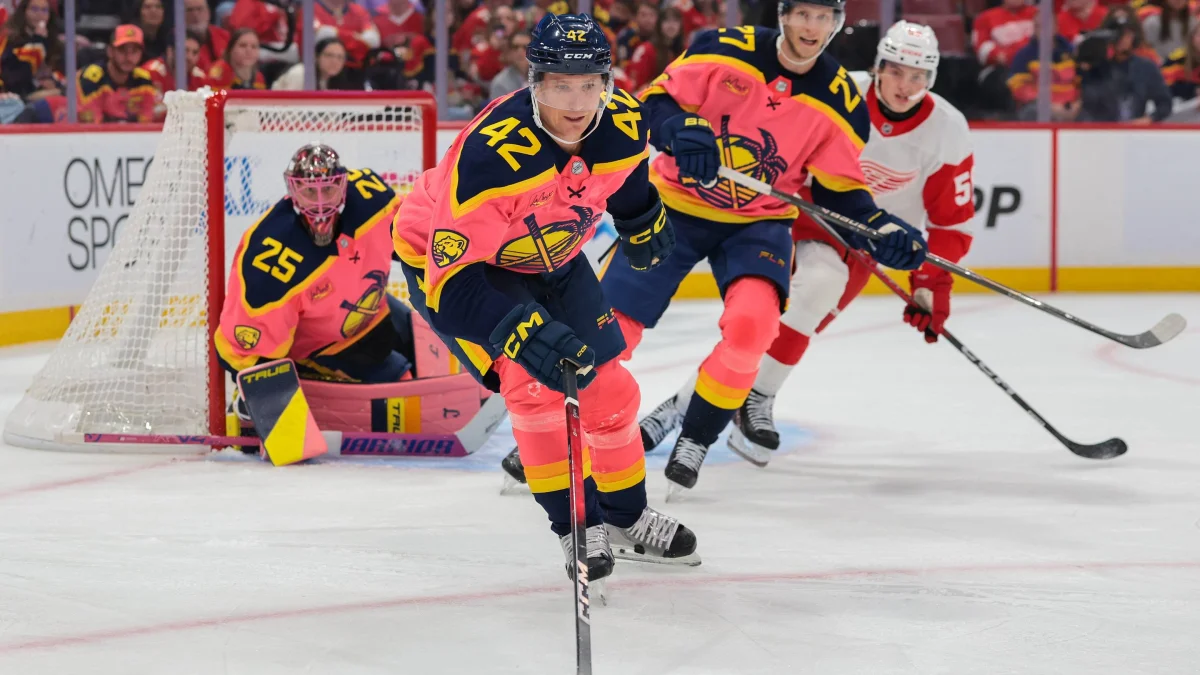
Kent Johnson’s Overtime Goal Caps Blue Jackets’ 63-Minute Stand Against Rangers
Columbus stayed composed, leaned on Jet Greaves and earned an overtime win over New York after a scoreless regulation.


Columbus showed a version of itself it can build on: patient, difficult to rattle and committed to its structure through a full 60 minutes and overtime. Kent Johnson finished the job with a goal in the extra period, giving the Blue Jackets a win over the New York Rangers after regulation ended scoreless.

The finish mattered, but the route there said more about what this group can be. The Jackets had to manage momentum shifts, defend through pressure and stay with their plan while chances went unfinished at the other end. They did that long enough for one well-worked attack to decide the night.
Structure carried the performance
The contrast with Columbus’ play through much of its first five games was striking. Against New York, the Jackets looked composed when the game tightened. They didn’t abandon their approach when the Rangers had a push, when Columbus’ own chances were stopped, or when penalties entered the picture. The team kept working within its shape instead of chasing the game.
That kind of response is a meaningful step for a club still establishing what its reliable version looks like. A team won’t control every stretch of every game, and a strong system has to hold up when the opponent has momentum. Here, Columbus remained connected across the lineup and didn’t let missed opportunities or a changing game state pull it away from its responsibilities.
The effort was spread across the roster. The forwards in all four lines had defined work to do, the six defensemen contributed to the team’s resistance, and Jet Greaves came through when called on. The Blue Jackets’ performance wasn’t built on one line carrying the attack or one player trying to solve every problem. It took a collective commitment to keep the Rangers from finding a breakthrough.
That’s the sort of foundation Columbus will need if it wants to compete consistently. Goals can arrive in bursts, but a team needs a repeatable way to stay in games on nights when the offense is quiet. Defensive detail, structure and goaltending gave the Jackets that chance against New York.
Greaves and the defense delivered
Columbus had identified limiting New York’s power-play opportunities, defending well and getting timely saves as priorities heading into the matchup. The team checked those boxes. The Rangers didn’t receive a power play until the third period, and Greaves stopped every shot he faced, earning the game’s first-star recognition.
Keeping the opponent off the power play for most of the night helped Columbus maintain its rhythm, though the Jackets had to handle their penalty trouble once it arrived. Their ability to get through those stretches without giving up a goal matched the broader story: the group didn’t lose its composure when the game demanded a different kind of shift.
Greaves’ work was central to the result, but the team’s defending helped create the conditions for his performance. The Jackets made the Rangers work for chances and kept the game close enough for one goal to stand up. There’s no save total in the account of the game, so the key measure is the one that defined the night: Greaves stopped them all.
Johnson’s finish made the difference
Neither team broke through during regulation, and the game stayed scoreless into overtime. Johnson ended it with a goal created by a quick, connected passing sequence. The Blue Jackets’ post of the finish captured the moment: Johnson became the hero after the team had spent the night earning its opportunity through disciplined play.
New York’s Dylan Garand also had a strong showing, turning away Columbus chances and helping keep the game level. He deserves credit for making the Jackets wait for their opening. The overtime winner came from a crisp play, but the low score reflected two goaltenders and two defenses making chances difficult to convert.
Columbus’ preview had laid out the same three priorities that shaped the result: limit power-play chances, defend with purpose and get saves. The pre-game breakdown set the targets; the team met them, then got the extra finish it needed from Johnson. The game record reflects a contest that lasted beyond the standard 60 minutes before Columbus settled it.
A standard to carry forward
A scoreless game through regulation won’t be everyone’s idea of an entertaining night. For Columbus, though, the performance offered something more useful than a high-event shootout: evidence that its structure can hold for a full game when the attack isn’t producing a string of goals. The Jackets believe a game played this way can often create enough chances to score three or four. Against Garand, one was enough.
That’s the challenge now. One strong outing doesn’t settle what the team will look like across a season, but it gives Columbus a clear standard to pursue. The next test is whether the same effort carries into its game in Minnesota. If the Jackets keep defending as a connected group and trust their structure through the difficult stretches, Johnson’s overtime finish can be more than a memorable ending; it can mark the kind of process they need to repeat.