Blue Jackets Power Play Needs Better Puck Retrieval and More Pressure
Columbus went 0-for-20 over seven games. Its opening-night goals show the value of quick puck movement, while its broader approach still leans too heavily on perimeter play.
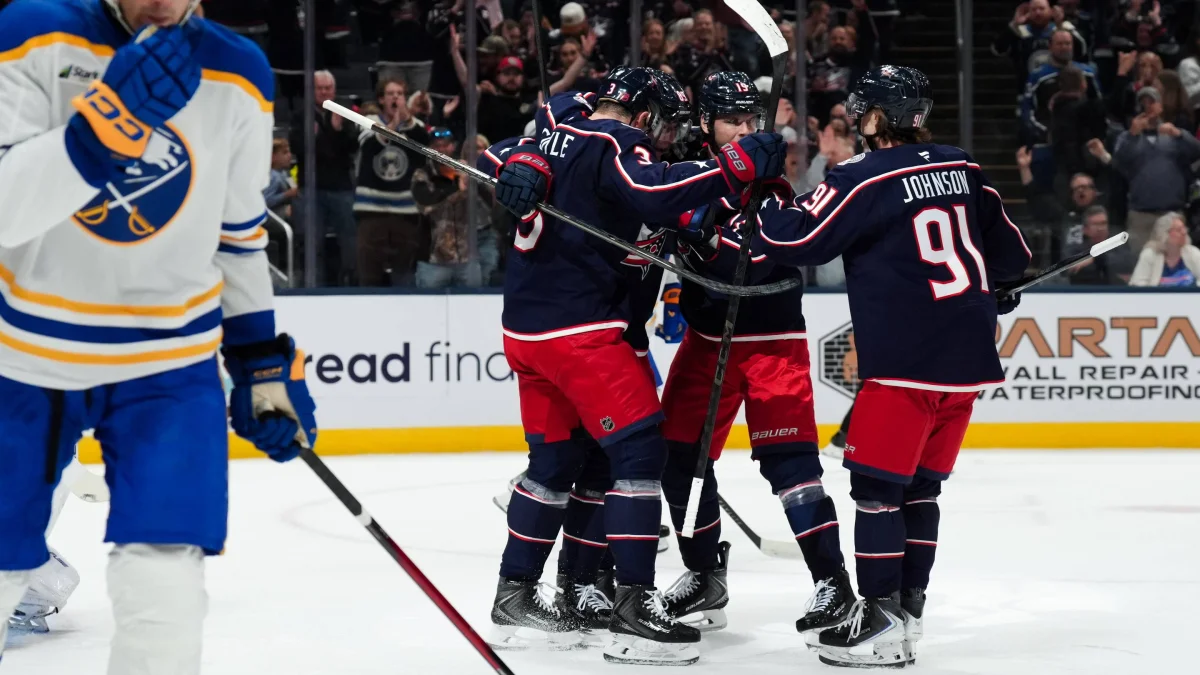
Columbus’ power play has a clear problem to solve: it needs to turn possession into sustained pressure. After scoring twice with the man advantage in a 6-3 opening-night win over Buffalo, the Blue Jackets went seven games without another power-play goal, going 0-for-20 over that stretch. Through eight games of the 2026-27 season, their conversion rate stood at 8.7%, last in the NHL. Buffalo was next at 9.1%, while 20 teams were converting at 20% or better.

That gap makes special teams a meaningful part of Columbus’ slow start. The team had won only once in regulation, and that opening-night victory was also the last time its power play scored. Columbus’ penalty kill was at 70%, 27th in the league, but the power play presents its own distinct challenge: finding ways to create dangerous chances that don’t depend on an opponent’s mistake.
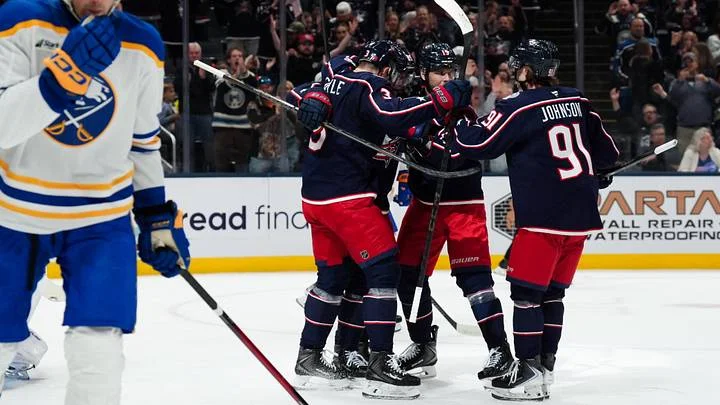
Knies’ goal shows the value of a second chance
Matthew Knies’ first goal as a Blue Jacket offered a useful example of what can work. Adam Fantilli’s first pass to Zach Werenski was awkward, but Werenski kept the puck in at the blue line. That recovery mattered: a power play can’t build much if one disrupted entry or contested pass ends the possession.
From there, Columbus moved the puck low and back out to Werenski. He drew the attention of Buffalo’s high defender, then found an opening with a pass back toward the lower part of the formation. The movement pulled apart the penalty-killing coverage. Knies recognized the space, slid back toward the top of the slot and scored with a one-timer.
The sequence wasn’t complicated. Its strength came from patience and timing. Columbus didn’t force a cross-ice pass into a covered lane, and its players kept the puck alive long enough to make Buffalo adjust. Once the defenders shifted, Knies had room to shoot. That’s a more repeatable route to a scoring chance than simply hoping an opponent loses its structure.
The other lesson is the value of recovering a puck after an imperfect play. Fantilli’s pass could have ended the possession, but Werenski’s work at the line gave the unit another chance to attack. For a group that has too often been one-and-done, keeping the puck in the zone and restarting the sequence should be a priority. A power play doesn’t need every pass to be clean; it does need players ready to win the next puck and continue the attack.
Monahan’s goal came after a loose sequence
Sean Monahan’s power-play goal against Buffalo ended with a good touch, but the buildup was less convincing. Columbus sent the puck around the boards into pressure several times before Valeri Nichushkin found space to control it. Nichushkin then located Monahan in the high slot, where Monahan redirected the puck into the net.
Buffalo’s defensive shape had kept most of the play to the outside. The penalty killers formed a broad box and largely protected the middle, leaving Columbus to work around them. The opening came when Buffalo failed to account for Monahan’s stick in the slot. If a defender had taken away that option, the pass might have produced a clear instead of a goal.
There’s credit due to Nichushkin for settling the puck and making the pass, and to Monahan for getting into position to finish. Still, the result shouldn’t obscure how much the chance depended on a coverage breakdown. Columbus can’t build its man advantage around waiting for defenders to make that kind of mistake. Against a well-organized penalty kill, repeated perimeter passes and board rims are easier to read and pressure.
The contrast between the two goals is useful. Knies scored after Columbus moved Buffalo’s coverage and found open ice. Monahan scored when a defender failed to close on a player in a dangerous area. Both count, but the first sequence gives the Blue Jackets a clearer blueprint for generating chances on purpose.
Keep the puck, then get inside
Columbus’ recurring trouble appears to start with puck retrieval. When the first play is stopped or pushed away, the unit often struggles to recover possession and establish itself. When it does get set, it can fall into circling the outside of the defensive formation, waiting for a seam to open. Trying to force a difficult pass through that formation adds another risk: a turnover can send the puck back toward Columbus’ end and waste valuable power-play time.
A more useful sequence begins with a controlled entry or recovery, followed by movement that makes the penalty killers turn and defend new angles. A pass through the middle can force the box to collapse or shift; a quick return pass can expose the space that shift leaves behind. From there, a player needs to shoot when the lane appears. If the shot is stopped or blocked, Columbus needs bodies ready to retrieve the rebound and extend the possession.
Those are basic ideas, but execution decides whether they create real pressure. The Knies goal paired puck recovery with a pass that changed Buffalo’s shape and a shooter who found open ice. The Monahan goal offered a reminder that even a scrappy possession can pay off, but the opening was helped by a defensive lapse. With the power play at 8.7% through eight games, Columbus needs more sequences built around movement, interior options and second chances. The next step is making those habits show up consistently, rather than waiting for the other team to hand over an opening.
Watch whether the Blue Jackets can sustain possessions after their first attack and make penalty killers defend the middle. If they can, the skill of players such as Werenski, Knies, Fantilli, Nichushkin and Monahan has more room to shape the outcome. If they remain outside the formation, a few isolated goals won’t answer the larger problem.
Sources: NHL team power-play statistics; Knies’ goal against Buffalo; Monahan’s goal against Buffalo. The source also noted Columbus’ limited offensive options.
===