Blue Jackets’ Goaltending Isn’t the Main Problem, but Jet Greaves Has Room to Rebound
Columbus has allowed 29 goals in eight games, but the deeper numbers point to defensive breakdowns and a drop in Greaves’ high-danger saves.
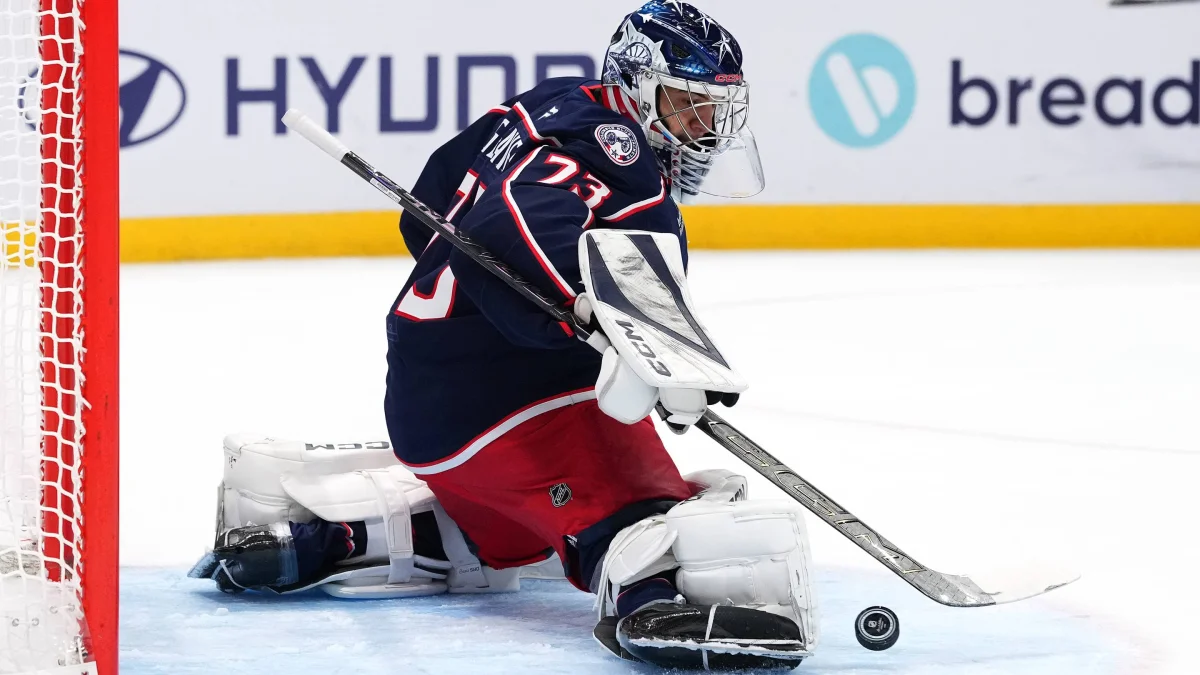
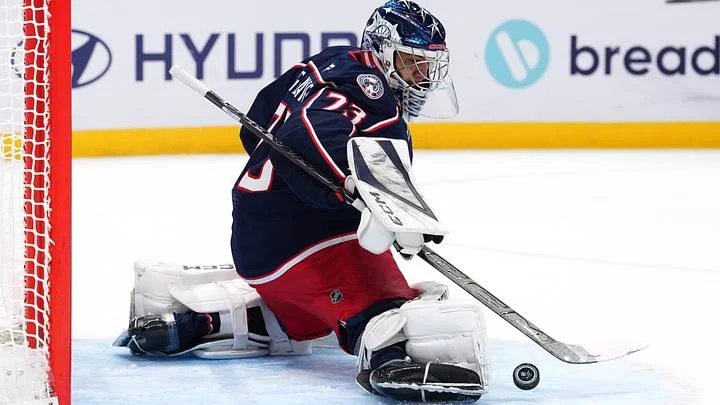
Columbus has given up 29 goals in eight games, and Jet Greaves hasn’t been as sharp as he was last season. Still, the early evidence doesn’t make him the central problem. The Blue Jackets’ defensive structure is allowing too many dangerous looks, while Greaves’ numbers suggest a narrower concern: he’s saving fewer of the toughest chances than he did a year ago.

The Blue Jackets are 3-5-0 and averaging 2.375 goals scored per game against 3.625 allowed. That gap puts pressure on every part of the lineup. Their scoring was already expected to be a challenge with this roster, but the goals against have made defense an even more urgent question. Goaltending belongs in that conversation, though the team’s results alone can’t tell us how much blame belongs in the crease.
Greaves has a .883 save percentage, a 3.34 goals-against average and a 2-3-0 record. Cam Talbot’s numbers are also below the standard Columbus needs: a .867 save percentage, a 3.40 goals-against average and a 1-2-0 record. Those figures are a rough start, but they don’t account for the quality of the shots each goalie faces or the breakdowns that lead to them.
The team context behind the numbers
Goals-against average and save percentage are useful snapshots, not complete explanations. A goalie facing repeated chances from close range can post a poor line even when the primary failure happens earlier in the play. The reverse can happen, too: strong team defense can make a goalie’s results look better. Columbus has allowed enough goals to put both its defending and its goaltending under scrutiny, but those roles need to be assessed separately.
Goals saved above expected offers one way to add that context. The measure estimates how difficult the shots against a goalie are, then compares the goals allowed with what those chances would be expected to produce. A result near zero means the goalie has allowed roughly what the shot quality predicts; a positive result means he has prevented more goals than expected, while a negative result points the other way.
On that measure, Greaves is at -0.04 this season and Talbot is at -0.09. Both are essentially around expected so far. That’s a meaningful counterweight to their traditional statistics: the early numbers don’t indicate that either goalie has been allowing far more goals than the chances in front of him would suggest.
The year-over-year comparison gives the figures more texture. Greaves was at +16.5 goals saved above expected last season, among the NHL’s strongest results in the category. Talbot was at -13.1, among the weakest. The current values are close to even for both, but the sample is still only eight team games. It’s too early to treat a small early-season reading as a settled verdict on either goalie’s ability.
Greaves’ high-danger work stands out
The clearest change in Greaves’ profile so far is on unblocked high-danger chances. He stopped 76.9 percent of those chances last season; this season, that figure is 69.2 percent. That drop matters because these are the attempts most likely to beat a goalie, and a few additional goals against can quickly shift the record and the broader impression of a team’s defense.
His save rates on low- and medium-danger chances remain above average, and the source’s comparison says they’re broadly in line with last season. That makes the high-danger decline the area to watch. It doesn’t, by itself, establish that Greaves has lost form. The number also reflects the quality of the opportunities Columbus is giving up, and the team’s defensive play has made those difficult situations a recurring issue.
The shot-danger chart from Greaves’ most recent game offers a visual example of the challenge: it shows a concentration of dangerous chances in front of the crease. When opponents get attempts from that area, even a well-positioned goalie has little margin for error. Columbus needs to reduce those looks before it can expect its goaltenders to consistently improve the results.
What Columbus needs to address
My read is that Greaves is having a slower start, not that the Blue Jackets have a goaltending crisis. His overall goals-saved-above-expected figure is close to even, and most of his save percentages have held near last season’s level. The decline on high-danger chances is real, but the team’s tendency to concede those chances is part of the same problem.
Last season’s +16.5 mark may also have encouraged Columbus to depend on Greaves to erase mistakes. A goalie who repeatedly comes up with difficult saves can mask defensive trouble for a stretch, but that kind of support isn’t a substitute for limiting quality chances. The Blue Jackets’ current scoring average leaves little room for a run of defensive mistakes, either; they need cleaner coverage and fewer unblocked attempts around the net.
Talbot’s early line deserves attention, especially given his -13.1 figure last season, but the current -0.09 mark doesn’t point to a major gap between his results and the shot quality he has faced. Greaves remains the more important indicator because he’s the goalie Columbus needs to carry the larger share of the workload. His high-danger saves, alongside the number of close-range opportunities the team gives up, will be worth tracking as the season continues.
For now, the bigger fix is in front of the crease. If Columbus cuts down on dangerous chances, Greaves has a clearer path to returning to his stronger form. Until then, the goaltenders’ surface numbers will keep reflecting a team that is asking too much of them.