Flyers Face Questions After Report of Michkov’s Trade Interest
Michkov hasn’t formally asked out, but reports of his frustration put Philadelphia’s handling of its young forward under scrutiny.
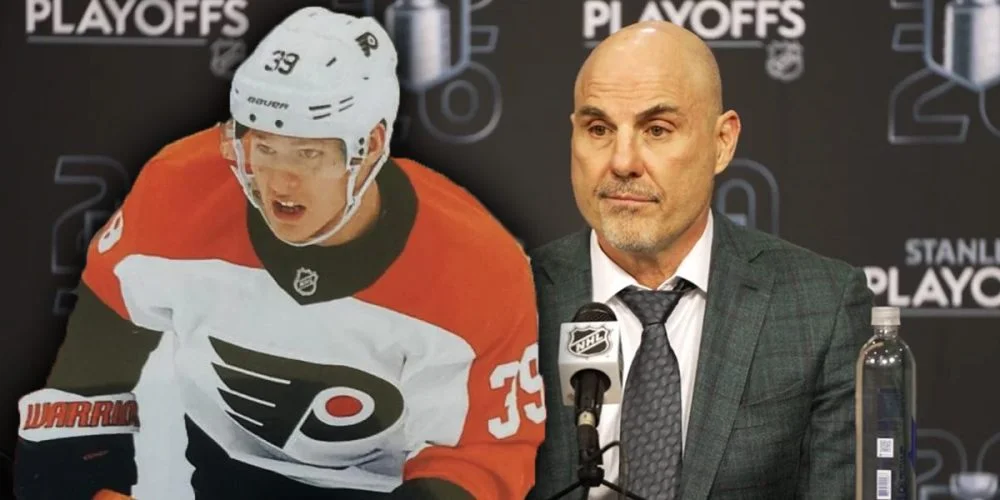
Philadelphia has a difficult question to answer: how does it keep Matvei Michkov central to its future if he’s frustrated with his role now? Kevin Weekes reported that Michkov would likely welcome a fresh start elsewhere, but other reporters say he hasn’t formally asked the Flyers for a trade. The gap between those accounts matters. Philadelphia has heard no request from Michkov’s camp, yet the report has put the relationship under a bright light.
The timing sharpened the attention. Hours before Weekes’ report on Tuesday, cameras caught Michkov arguing with teammate Nick Seeler. What sparked the exchange hasn’t been confirmed. One account connected it to a missed pass in the Flyers’ game against Vancouver, but that remains unverified. The clip can’t establish what was said or whether it reflects a larger problem.
Michkov is in the final year of his entry-level contract and is set to become a restricted free agent this summer. That makes the question of his intentions especially significant for Philadelphia, but the reported interest in a fresh start shouldn’t be treated as a formal trade request. Emily Kaplan, Anthony Di Marco and Charlie O’Connor each reported that no request had been made and that the Flyers’ front office was caught off guard.
Kaplan wrote that Michkov “has not formally requested a trade from the Flyers” and that the report was news to the team’s front office. Di Marco backed that account, saying the Flyers had not heard from Michkov’s camp. He also relayed whispers that the tension may have boiled over after Monday’s game. That timing is a reported possibility, not a confirmed explanation.
What Philadelphia knew—and when
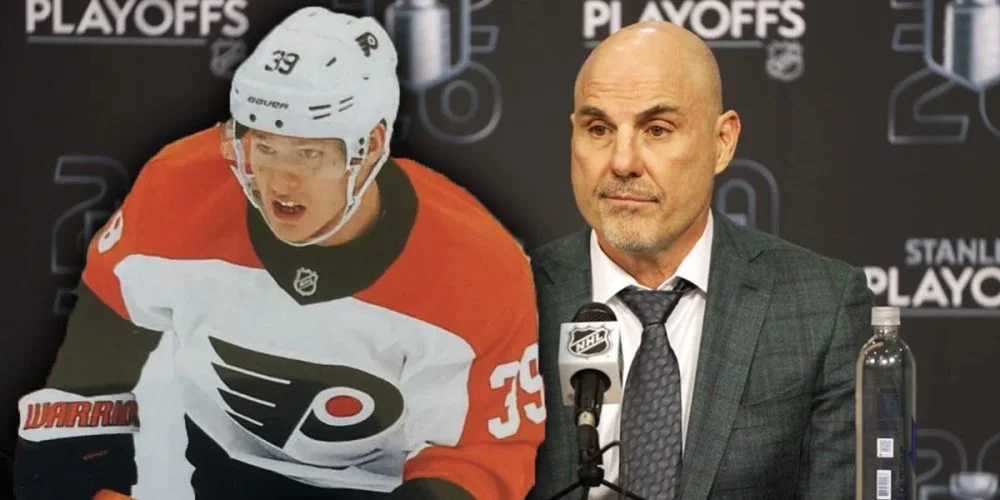
The team’s surprise may be hard for fans to square with the public picture of Michkov’s time in Philadelphia. He has appeared unhappy at points, and questions have surfaced about his playing time and how he responds to coaching. Rick Tocchet is the latest coach named in that discussion. Those impressions can help explain why a report of trade interest feels plausible; they don’t confirm that Michkov or his representatives contacted the club.
There’s also a distinction between a player’s reported feelings and a request delivered to management. If Michkov’s camp has conveyed interest in a change through other channels, the Flyers could be caught unaware of any direct request while still facing a genuine concern about his comfort with the team. The available reporting doesn’t establish how, or whether, that interest reached anyone outside reporters’ sources.
Weekes’ report and the follow-up accounts can therefore coexist: one describes what Michkov may want, while the others say Philadelphia hasn’t received a formal request. General manager Danny Briere is attending the GM meetings and won’t comment, so the team hasn’t publicly filled in the gaps. For now, the key point is that a trade request has not been reported as formally made.
A response that starts with Michkov’s role
The next useful step is a direct conversation between Briere, Michkov and his representatives. Philadelphia needs to learn what’s behind the reported frustration, then make its expectations and plans clear. That discussion should include the role the team sees for Michkov and how his minutes and responsibilities fit into that plan. A promise matters only if his day-to-day usage supports it.
If the Flyers view Michkov as central to their long-term success, his deployment should reflect that belief. The case for giving him more responsibility is straightforward: a young scorer needs meaningful opportunities to contribute, including in demanding situations. The reporting here doesn’t provide his ice time or a full breakdown of his assignments, so it can’t show whether his current role matches that standard. Philadelphia can settle the question by being clear with him about what it expects and what he can expect in return.
Di Marco also relayed a separate assessment from sources who described veteran players as a major concern. Those sources said the play of Porter Martone and Michkov wasn’t the problem, and named Travis Konecny, Sean Couturier and Trevor Zegras among the forwards they felt weren’t doing enough. On defense, they pointed to Travis Sanheim and Cam York, citing the team’s difficulty closing out tight games. Those are attributed judgments, not established findings about each player’s performance.
That account puts the team’s broader struggles into the conversation, but it doesn’t settle the issue. If leadership or the room is contributing to Michkov’s frustration, the Flyers will have to address it directly rather than assume that changing one player’s role will fix everything. If the trouble is chiefly about his own usage, a clear plan with consistent follow-through is a more direct response.
Di Marco reported that Philadelphia could make changes to its veteran core if the season doesn’t turn around, even if Konecny uses his no-movement clause. That’s a conditional possibility, not a completed move or a settled plan. The immediate test is whether Briere can get a clearer account from Michkov’s side and whether the team can respond with a role that matches its stated belief in him. Until then, the reporting points to a serious question about fit, not a confirmed request to leave.