Hellebuyck's Return Puts Jets Fans' Anger Under the Microscope
Booed in his return to Winnipeg, Connor Hellebuyck's exit forces Jets fans to ask where disappointment ends and misplaced anger begins.
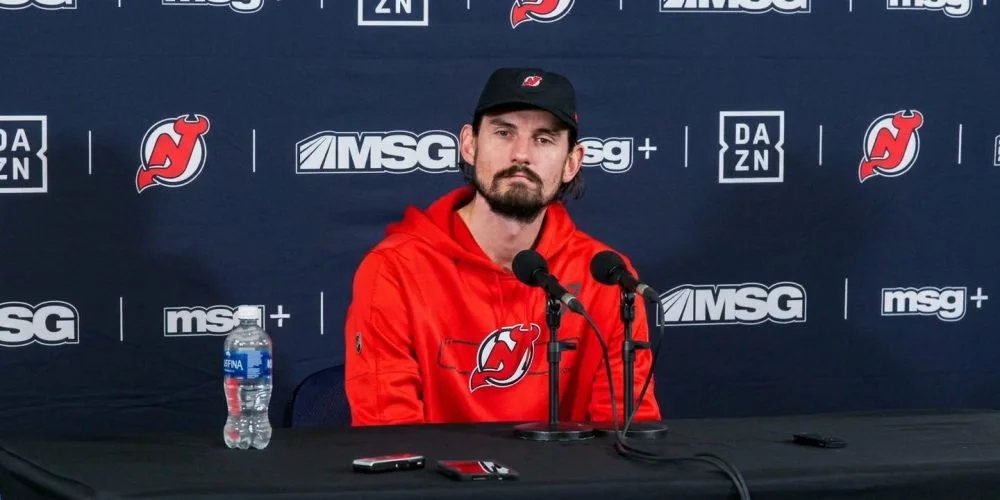
The boos that greeted Connor Hellebuyck on his return to Winnipeg were loud enough to tell you how much the fanbase still feels about his departure. What's harder to hear is the logic behind them. Disappointment makes sense. Calling him a coward for leaving is a much bigger leap, and I'm not sure the reasoning holds up when you look at the whole picture.
What Hellebuyck Gave the Franchise
Start with the résumé, because it's the part that gets lost in the noise. Hellebuyck spent 11 of his 12 NHL seasons in Winnipeg, and he didn't just sit in the crease for that stretch. He won three Vezina Trophies and became one of the defining players in franchise history. Goaltenders who reach that level in one city tend to become part of the team's identity, and that's the relationship fans feel they're owed a say in. I get why it stings.
But a long run with one franchise doesn't create a contract that outlasts the player's own life decisions. Here's the thing: fans often talk about loyalty as if it flows in one direction. The team gets the goaltender's best years, and the goaltender is expected to stay put no matter what else is happening. That's a lopsided way to frame a career that was, by any measure, a very good one for the people who watched it.
The Family Question Changes the Math
Hellebuyck has said that threats against his family, along with other incidents that made them uncomfortable, and real uncertainty about his career path, played a part in his decision to leave. Those are not small things, and they shouldn't be treated as a footnote to a hockey trade. A player weighing a move is also a husband and father, and when the people closest to him feel unsafe, the calculation changes in a hurry.
That's the part I keep returning to. Walking away from a city where you've spent more than a decade building relationships with teammates who became friends is a real sacrifice. Most people, if they're honest, would struggle to make that choice easily. Asking someone to put a team's feelings ahead of his family's wellbeing is a hard ask, and the fans shouting "coward" from the seats don't have to make that tradeoff. Mostly, they don't have to imagine it.
Where Disappointment Ends and Something Worse Begins
There's a clear line between being upset and being cruel, and fans are entitled to cross the first one freely. They can question the timing of the move. They can argue that the Jets gave up too much, or that his playoff performances left them wanting more. Those are fair takes in a sport where every shift is picked apart. What's different is when the anger moves from the decision to the person's family. Once threats enter the picture, the conversation isn't about hockey anymore.
And yet the reaction I've seen points to something else. When a player leaves, the anger often gets aimed at him personally, as if he owed the fanbase his silence about whatever else was going on. That's a pattern worth noticing, because it suggests the hurt is less about one trade and more about feeling abandoned by someone the city had embraced. I understand that feeling. I just don't think it justifies booing a man who has been dealing with a lot off the ice.
Money, Fame and the Distance Between Players and Fans
Part of the problem may be the gap between the people in the seats and the people on the ice. Professional hockey players earn very well, and that income can make them seem like they operate under different rules. Some fans may feel that a player with that kind of wealth and fame has less reason to be sympathetic when things get hard. That's an easy assumption to make, and it's also a dangerous one, because money doesn't make anyone immune to threats or to the pressure of being a public figure.
It's also worth asking how many of the loudest voices would make a different choice in the same spot. Plenty of people would put their families first without thinking twice. The uncomfortable part is that the people calling Hellebuyck a coward may never have been asked to find out.
Not Every Fan Was Part of That Chorus
A fanbase isn't a single voice, and a few people's behavior shouldn't define everyone who cheers for the Jets. Nobody in the building was responsible for the threats made against his family, and the people who wrote them don't speak for Winnipeg. Most supporters are probably just frustrated, watching a goaltender they admired play for a rival and wondering what went wrong.
My read is that the frustration is valid and the anger has to be pointed carefully. You can miss a player, wish the trade had gone differently and still refuse to join in on the name-calling. Hellebuyck's career in Winnipeg earned him plenty of respect, and that respect doesn't disappear because he made a hard decision about his family's safety. The fans who get this right will be the ones who can hold both things at once.
What to Watch Next
For the Jets, the immediate story is how the fanbase settles on this exit over the coming months. Teams that lose a franchise cornerstone usually spend a long stretch sorting out their goaltending and their identity at the same time, and that process tends to soften the sharpest feelings. For Hellebuyck, the question is how he's received on future visits and whether the boos fade as the distance from his Winnipeg years grows. Either way, the reaction says more about the bond between a city and its best player than about the trade itself, and that bond is worth remembering when the next hard decision comes along.