Canucks Trade Board: Jake DeBrusk and Elias Pettersson Draw Attention
DeBrusk and Pettersson land on Bleacher Report’s trade board as Vancouver’s 3-12-1 start sharpens questions about its roster.
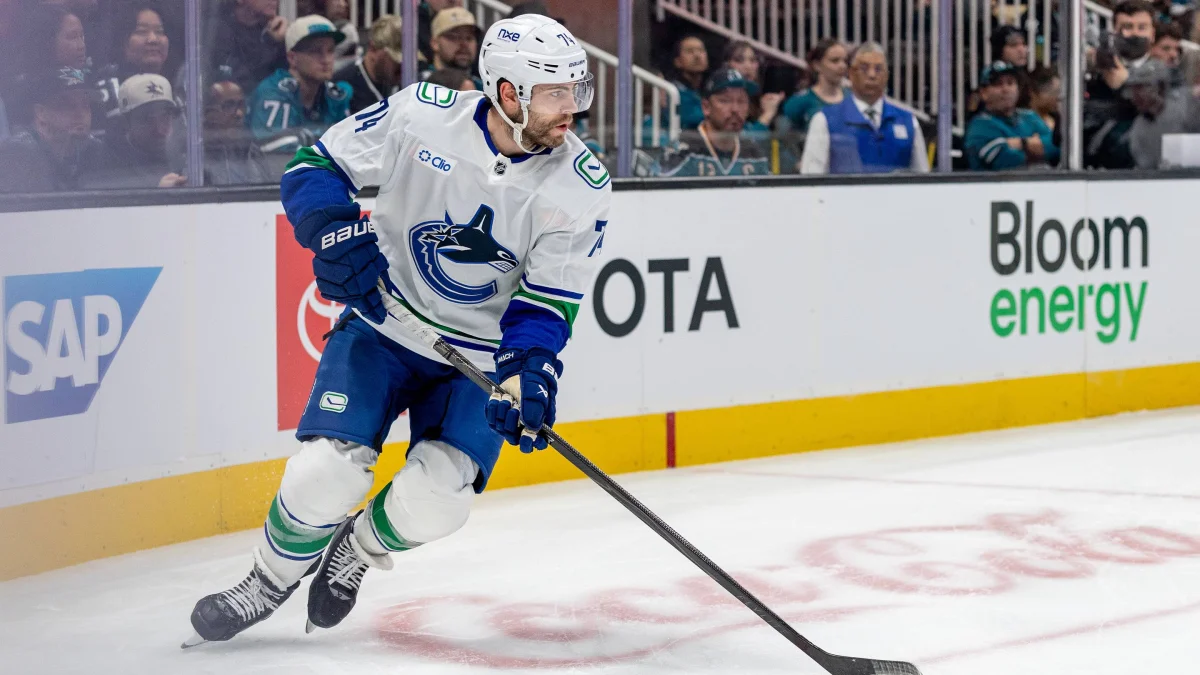
Vancouver’s 3-12-1 start has put Jake DeBrusk and Elias Pettersson on the trade radar, but their situations present very different questions for the Canucks. Both forwards appeared on Lyle Richardson’s latest trade board for Bleacher Report: DeBrusk at No. 10 and Pettersson at No. 15. Those rankings reflect speculation, not a reported deal or confirmation that Vancouver plans to move either player.

The Canucks have won once in their last 13 games and are in a rebuild after trading several former key players since last season. That context makes outside interest in established forwards unsurprising. Still, a team’s place on a trade board only signals that a player is being discussed; it doesn’t establish what Vancouver would ask for, whether another club has made an offer, or whether either side wants a change.
DeBrusk offers a more conventional trade profile
DeBrusk’s history as a middle-six scorer gives potential buyers a straightforward reason to consider him. The 2015 first-round pick has produced secondary offense over his career, and his current output gives that case some support: he has three goals and eight points through 14 games this season. Last season, he recorded 23 goals and 42 points in 81 games.

That scoring profile could suit a playoff contender looking to add help among its middle-six forwards. DeBrusk can contribute goals without needing to be the centerpiece of an offense, which may make his role easier for an acquiring team to picture. Whether that translates into a strong return would depend on the market and the Canucks’ expectations; the source provides no asking price or specific interested teams.
His contract is another part of the calculation. DeBrusk carries a $5.5 million cap hit through the 2030-31 season. That figure may look manageable for a club seeking a proven scorer, but the term means any buyer would be taking on a multiyear commitment. His production and the remaining contract would have to be weighed together, rather than treating his early-season points as the whole case.
There’s also a personal backdrop to the speculation. DeBrusk previously expressed frustration about playing for a rebuilding team, a comment that helped fuel questions about his future in Vancouver. That history adds context to the trade chatter, but it does not amount to a request to leave or proof that the Canucks are preparing a move.
Pettersson’s value hinges on his return to form
Pettersson’s place on the board reflects a different kind of possibility. The 27-year-old center has been a recurring subject of trade rumors, and his four goals and 16 points in 16 games suggest signs of his earlier star-level play. He is producing despite the club’s difficult start, giving interested teams a reason to monitor whether that form holds.
A playoff team looking for a top-six center could find Pettersson’s skill set appealing. But acquiring him would involve a much larger financial commitment than adding DeBrusk: Pettersson has an $11.6 million cap hit through 2031-32. That contract could narrow the field of potential buyers or require a complex financial arrangement. The source does not identify any suitors or outline how a deal might be structured.
If Pettersson keeps producing, his market value could rise as the season progresses. Sustained play would strengthen the argument that he can help a contender immediately, while also giving Vancouver a clearer basis for evaluating any interest. One strong stretch alone, though, doesn’t answer whether a transfer would make sense for the player or the club.
For the Canucks, the two names on Richardson’s board frame the rebuild’s roster questions from different angles. DeBrusk brings a middle-six scoring record and a lower cap hit with substantial term; Pettersson offers top-six center upside and a much higher annual cost. Vancouver’s results, each player’s performance, and any genuine team-to-team interest will determine whether this trade-board attention develops into anything more.