Brady Tkachuk’s Four-Point Night Gives Florida Panthers’ Slow Start Needed Context
Tkachuk recorded four points in Florida’s 7-3 win over Columbus, offering a strong response while leaving bigger team questions open.


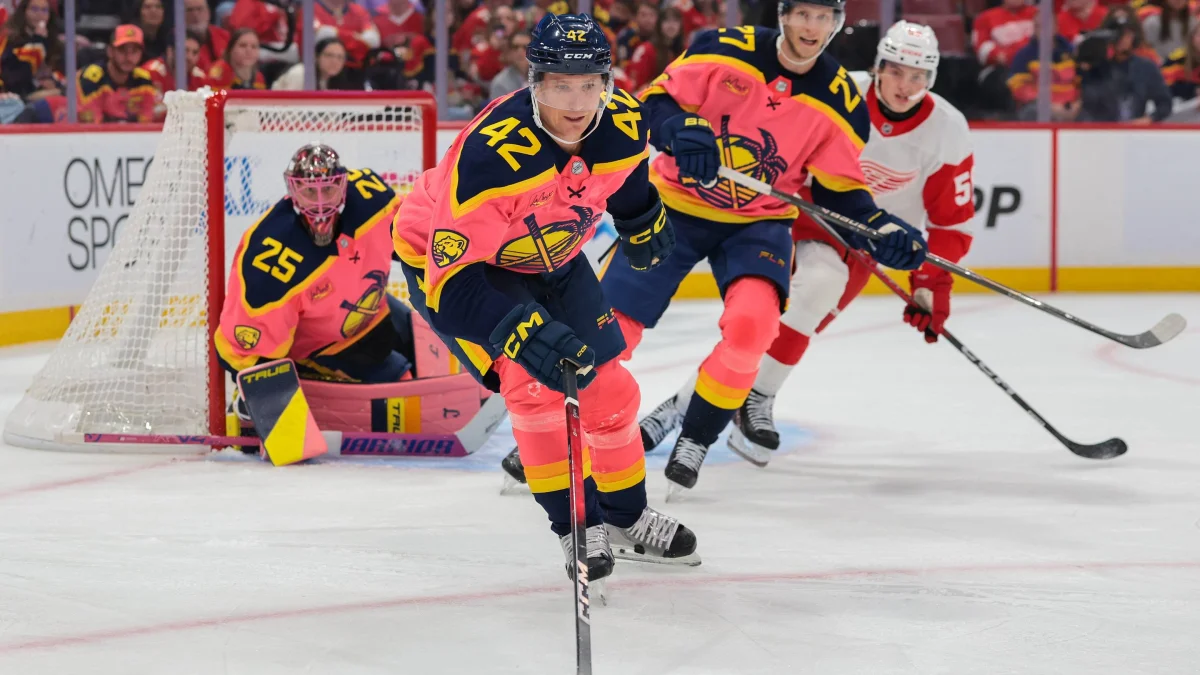
Brady Tkachuk’s four-point performance in Florida’s 7-3 win over Columbus is a timely reminder that a slow start doesn’t tell the whole story of a player joining a new system. The night included a natural hat trick, according to the game image caption, and gave the Panthers a decisive offensive result after questions about their production and recent play.

One strong outing can’t resolve every concern around Florida. It does make a verdict on Tkachuk’s early adjustment look premature. Production depends on more than a forward’s individual talent: role, line chemistry and the way a team creates chances all shape what shows up on the scoresheet.
A new system takes time to read
Tkachuk arrived with leadership qualities, but that doesn’t automatically make a change in playing style easy. He still had to learn where Florida’s structure creates openings, when to attack them and how to turn his strengths into offense within Paul Maurice’s approach. A brief stretch without points can invite scrutiny, yet it offers limited evidence about how well a player will fit once those details start to settle.
The Panthers’ game often asks forwards to make their impact through pressure. Recover the puck, get it forward, pursue the next touch, finish a check and keep the opponent under stress. That work can produce chances and wear down a defense, but it doesn’t always create the patient possession or intricate combinations that make offense look effortless.
That distinction matters when judging a player by points alone. If a team’s attack is built around forcing turnovers and sustaining pressure, a forward may be doing useful work that doesn’t immediately become a goal or assist. The challenge for Tkachuk is to find ways to add scoring within that framework. His night against Columbus shows what can happen when the pressure game and his offensive instincts connect.
Florida’s style has a trade-off
Maurice’s direct, physical approach can be an asset when the stakes rise. Players challenge for loose pucks, make opponents work through contact and extend attacking sequences by keeping pressure on. The Panthers have shown they can be effective when they commit to that style. But an attack that depends heavily on effort and disruption can become predictable if it lacks another route to chances.
There’s a regular-season tension here. The structure remains, but the pace and intensity of every possession don’t always match what a team can summon in a playoff setting. When the pressure game loses some sharpness, Florida can end up chasing the puck and trying to manufacture the next opportunity through another battle. That’s demanding hockey, and it doesn’t guarantee the kind of clean offense that produces steady scoring.
Line combinations also shape how much invention the Panthers can find. Playing with his brother, Matthew Tkachuk, may help Brady build chemistry and recognize opportunities. But a familiar connection can’t answer every question on its own; the line still needs ways to turn pressure into controlled possession and quality looks.
Skill across the lineup is only part of the answer
Florida has players who can bring different tools to its attack. Aleksander Barkov can hold onto the puck and create combinations. Carter Verhaeghe and Anton Lundell offer another kind of creativity, while Brad Marchand brings his own edge. Sam Bennett and Brady Tkachuk are comfortable applying pressure and contesting difficult pucks, though that strength doesn’t automatically produce the variety a lineup needs.
The source article points to Barkov’s and Marchand’s absences as limits on Florida’s ability to break out of repetitive offensive sequences. When those options aren’t available, the effect can reach beyond one line: the Panthers have fewer players who can change the rhythm or create an unexpected opening. The team’s depth on paper doesn’t guarantee that every combination will produce the same balance of pressure, skill and finish.
The questions also extend beyond the forwards. Florida’s defense needs to help create more offense, particularly on the power play, and the article raises goaltending as another area of concern. A big scoring night from the forwards can’t answer those broader needs. Even a lineup with plenty of talent has to generate offense from multiple parts of the roster and get the necessary work in net.
One result changes the frame, not the whole picture
The 7-3 score is a strong response to doubts about Florida’s scoring, and Tkachuk’s four points give his early adjustment a different context. The result supports a straightforward read: patience was warranted while he learned how the Panthers create offense. His output is evidence that the fit can produce a major night, not proof that every concern has disappeared.
Florida still has to show that it can create chances when opponents limit its pressure game. The defense’s contribution, the power play and goaltending remain part of that evaluation. For Tkachuk, the next step is carrying the lessons of this performance into the team’s regular routines and finding consistent ways to turn his direct style into offense.
The earlier criticism focused too tightly on a short run of individual production. Columbus offered a timely counterpoint: give a capable player time to adjust, and one night can reveal possibilities that a slow start obscures. The Panthers now need to build on the win and show that this attack can deliver more than a single burst.
For more on the context around Tkachuk’s start, read the earlier assessment of his adjustment in Florida. The team’s broader offensive concerns are also explored in the breakdown of Florida’s home opener.